Nature and sky·Confirmed
BirdLife birdwatching trip 2026
14 November 2026·Mandria, Pafos district
(official site, opens in a new tab)
Nature · Birds
Cyprus sits on one of the great migration routes between Europe and Africa, and the Pafos district holds several protected bird areas. Where to go, when, and how to watch well.
The short answer
Yes. Cyprus lies on a major migration route between Africa and Europe, and BirdLife Cyprus says literally millions of birds pass through in spring and autumn. Spring migration runs from February to May, autumn raptor passage from late August to early November, and winter has birds of its own. Several protected bird areas are within reach, from the lighthouse headland about 20 minutes' walk from us to the Akamas and Pafos Forest. No bird is guaranteed on any given day, so check BirdLife Cyprus for current news.
Cyprus sits on one of the main flyways between Africa and Europe. BirdLife Cyprus, the island's partner in BirdLife International, says that in spring and autumn "literally millions" of birds pass through. More than 200 species occur as regular passage migrants, and BirdLife counts over 400 recorded on the island. The tourism board gives 378, so treat any single number as a guide.
Every source we checked names two full endemic species, birds that breed nowhere else: the Cyprus Warbler and the Cyprus Wheatear. The Cyprus Scops Owl is where the sources part. The tourism board lists it as an endemic subspecies, alongside the Cyprus Coal Tit, Short-toed Treecreeper and Cyprus Jay. BirdLife Cyprus's birdwatching guide counts it as a third endemic species. We leave that one to the ornithologists.
BirdLife Cyprus describes three birding seasons. They are broad windows, not a timetable.
| Season | When | What to expect |
|---|---|---|
| Spring migration | February to May, in full swing by late March | Swallows and wheatears first, then harriers, warblers, buntings, bee-eaters and waders |
| Autumn raptor passage | Late August to early November | Raptors, storks, cranes, herons and shrikes on the move |
| Winter | November to February | Wintering ducks, thrushes and a few specialists |
It starts early. BirdLife notes the first swallows, martins and wheatears in early February, Great Spotted Cuckoos later that month and the first Hoopoes in early March. Late March and April bring the most variety: Pallid Harrier, Wryneck, Black-eared Wheatear, Rüppell's and Subalpine Warblers, Cretzschmar's and Ortolan Buntings, bee-eaters, rollers, shrikes, Golden Oriole, herons and waders. Wader passage, and the chance of a rarity, carry on into May.
Autumn raptor passage is concentrated in these weeks. BirdLife counts raptors at bottleneck sites, and the one it names is the Akrotiri Peninsula, outside the Pafos district. Across the island, birds on the move include Honey Buzzard, Lesser Spotted Eagle, Red-footed Falcon and Egyptian Vulture, with storks, cranes and herons.
BirdLife describes winter as having "quite a northern Europe feel": flocks of wintering duck, thrushes, and specialists such as Finsch's Wheatear. Closer to us, the Greater Sand Plover is a winter visitor to the lighthouse headland, and Visit Pafos names Stonechat and Song Thrush among the Akamas's winter visitors.
Visit Pafos recommends late autumn, especially November, and spring for walking. Our winter walking and winter sun guides cover the trails and the weather.
The closest birding to us is officially protected. The lighthouse headland, inside the Kato Pafos Archaeological Park, is a designated Special Protection Area, about 20 minutes' walk from our door.
Its official priority species are the Greater Sand Plover, a winter visitor, and the two endemic breeders, the Cyprus Wheatear and the Cyprus Warbler. It is worth a look in both migration seasons, and in winter for the sand plover.
The coastal path that makes it easy to reach is also its main pressure: the official site notes say the number of people using it may disturb the birds. Walk quietly and give them room.
BirdLife Cyprus runs a recurring guided walk here, meeting at the lighthouse site, with a small charge for non-members, booked through BirdLife's online shop. Dates change through the year, so check the walk listing for the next one.
Beyond the headland, the tourism board's official notes describe more Special Protection Areas (SPAs) within a day's reach. The birds listed are the ones those notes name, not a promise.
| Site | Birds named officially | From us |
|---|---|---|
| Xeros Valley, down to Asprokremmos Dam (SPA) | Black Francolin, Griffon Vulture, Stone Curlew, Roller, Cyprus Wheatear | About 30 minutes' drive, to the dam |
| Evretou Reservoir (SPA) | Long-legged Buzzard, Bonelli's Eagle, Black-winged Stilt, Wood Sandpiper, Squacco Heron, Hoopoe, European Roller | About 55 minutes' drive |
| Vouni Panagias (SPA) | Breeding Griffon Vulture, Peregrine Falcon and Long-legged Buzzard; one of the island's last raven pairs | Around 1 hour by car, to Pano Panagia |
| Akamas peninsula (Natura 2000) | Bonelli's Eagle, Cyprus Warbler, and around 170 passage migrants recorded | Around 1 hour 15 minutes by car, to the Baths of Aphrodite |
| Pafos Forest (SPA) | Bonelli's Eagle, Goshawk, and the only breeding Sparrowhawks in Cyprus | Around 1 hour 45 minutes by car, to Stavros tis Psokas |
The river in the Xeros Valley flows only in winter and spring, so go then. At Evretou, look for waders and waterbirds in the passage periods.
In the Akamas, Bonelli's Eagle is the only eagle that breeds in Cyprus, and the Cyprus Warbler now faces competition from the colonising Sardinian Warbler. The rare Wallcreeper is occasionally seen on the Avakas Gorge cliffs, but the Forestry Department closed the gorge in December 2025 and we found no reopening notice. Please do not enter it while it is closed. Our winter walking guide covers the Akamas nature trails.
Pafos Forest is also a stronghold for the Short-toed Treecreeper, Cyprus Coal Tit and both endemics, and Griffon Vultures still come to drink near Tripylos. Check road conditions before any winter drive into the hills.
Trip reports by visiting birders also mention the countryside around Anarita and Mandria, both about 25 minutes' drive. We have not found these described by BirdLife Cyprus or the tourism board, so treat them as leads and ask BirdLife for current advice.
Check before you go
BirdLife Cyprus's code of good practice starts from one line: "the interests of the birds must always come first." In practice:
With a camera, the bird sets the distance, not the lens.
Cyprus still has a serious problem with illegal trapping, using mist nets and limesticks to catch birds for a dish called ambelopoulia. BirdLife Cyprus and the RSPB have monitored it since 2002, and BirdLife's autumn 2025 report estimated 726,000 birds killed within its survey area. Most of that is in the Larnaca and Famagusta districts, but the official notes for Vouni Panagias name poaching, including limesticking, as a problem there.
If you see shooting, mist nets, limesticks or glue sticks:
Spring birding comes with flowers. Visit Pafos puts Cyprus at close to 2,000 wildflower species, around 140 of them endemic, and the Akamas alone holds 34 of the island's 46 orchid species. No official source gives flowering months; botanical guides suggest late February to May, with the most orchids out around late March and early April. Persian cyclamen flowers on the Akamas coast through winter and spring.
Some of these plants are very rare. The Akamas tulip has a world population of around 200 plants, all on the peninsula, so look and leave them be. Pafos also holds an annual spring flower festival; for confirmed events, see what's on in Pafos.
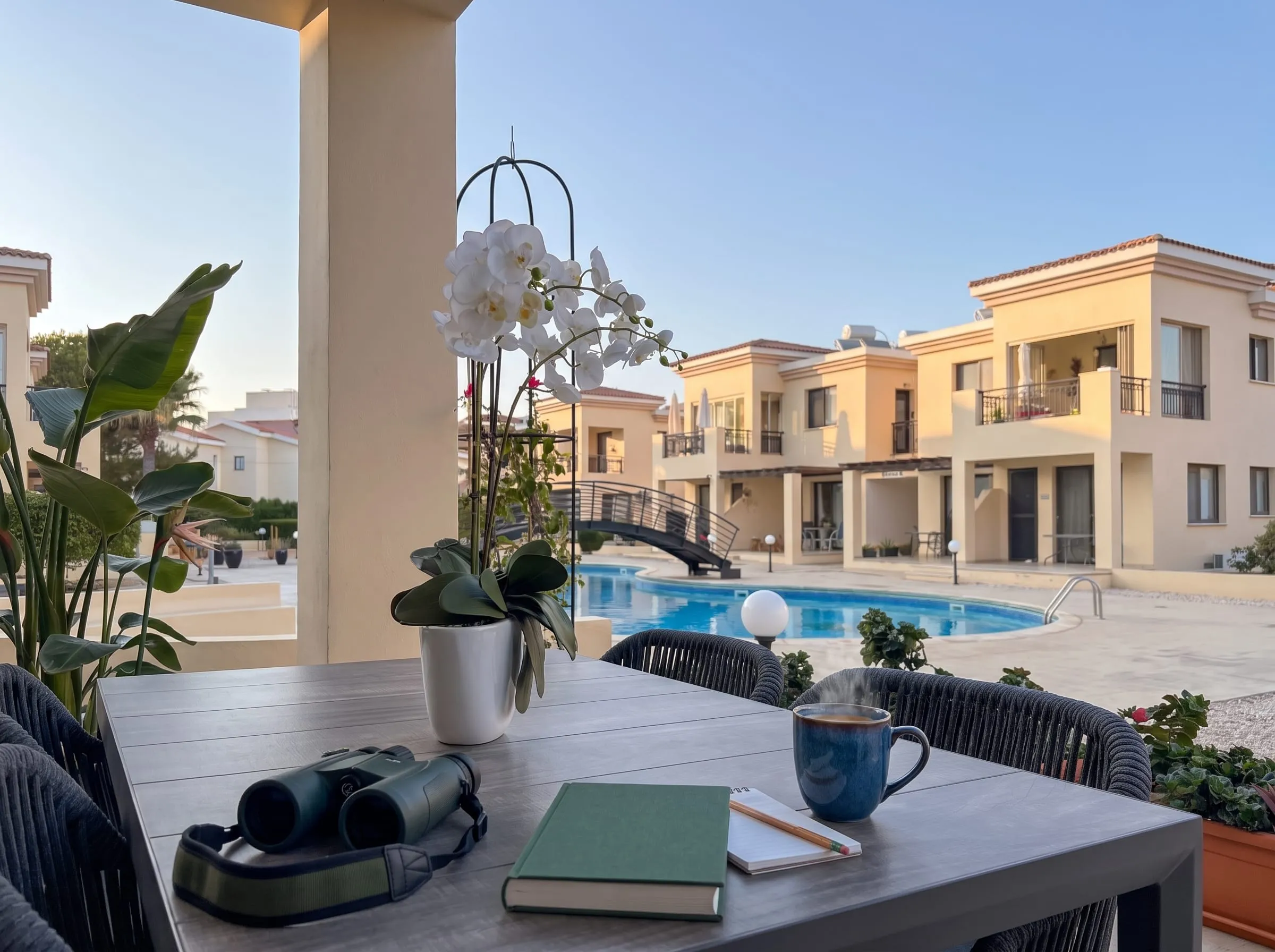
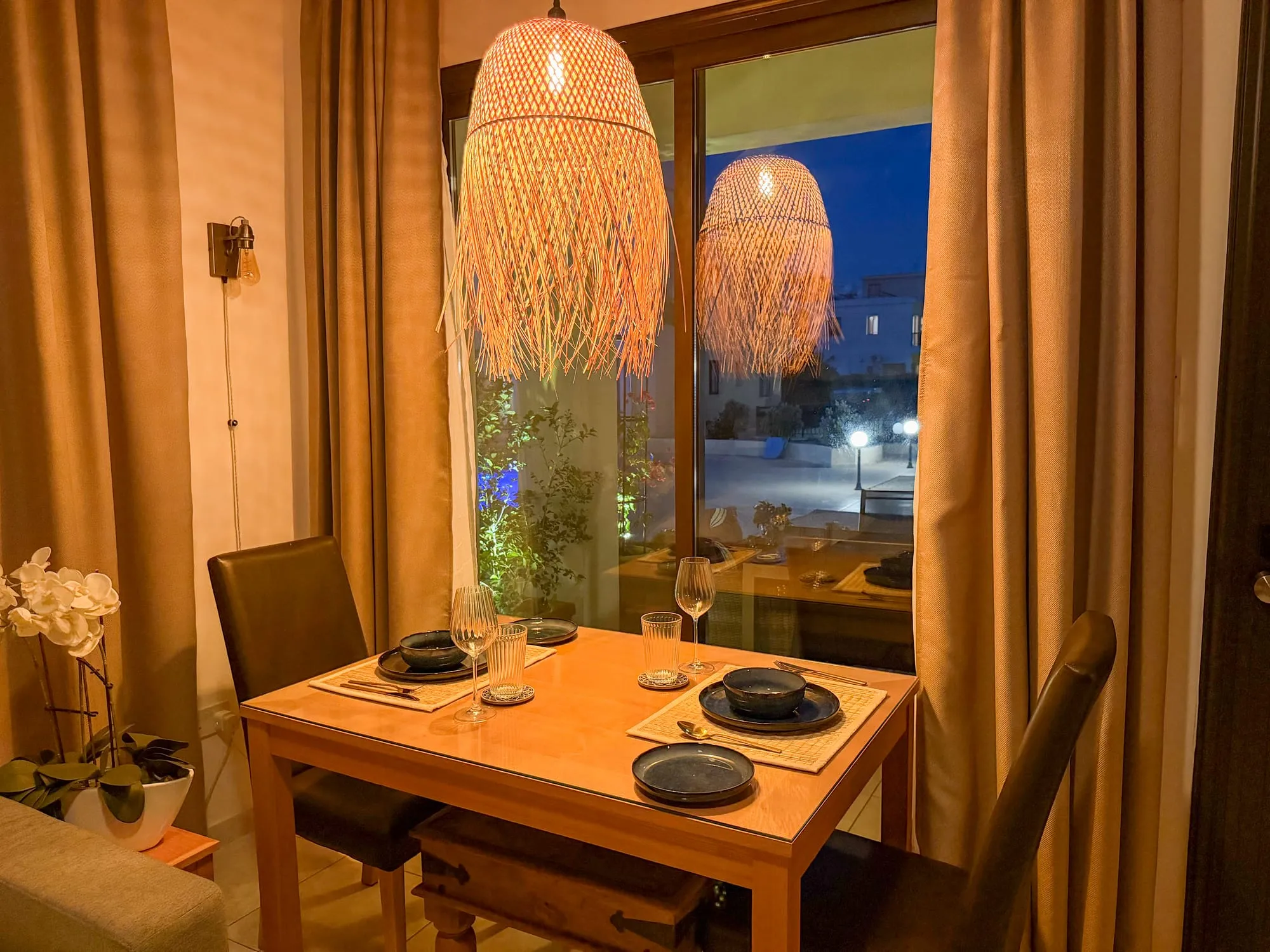
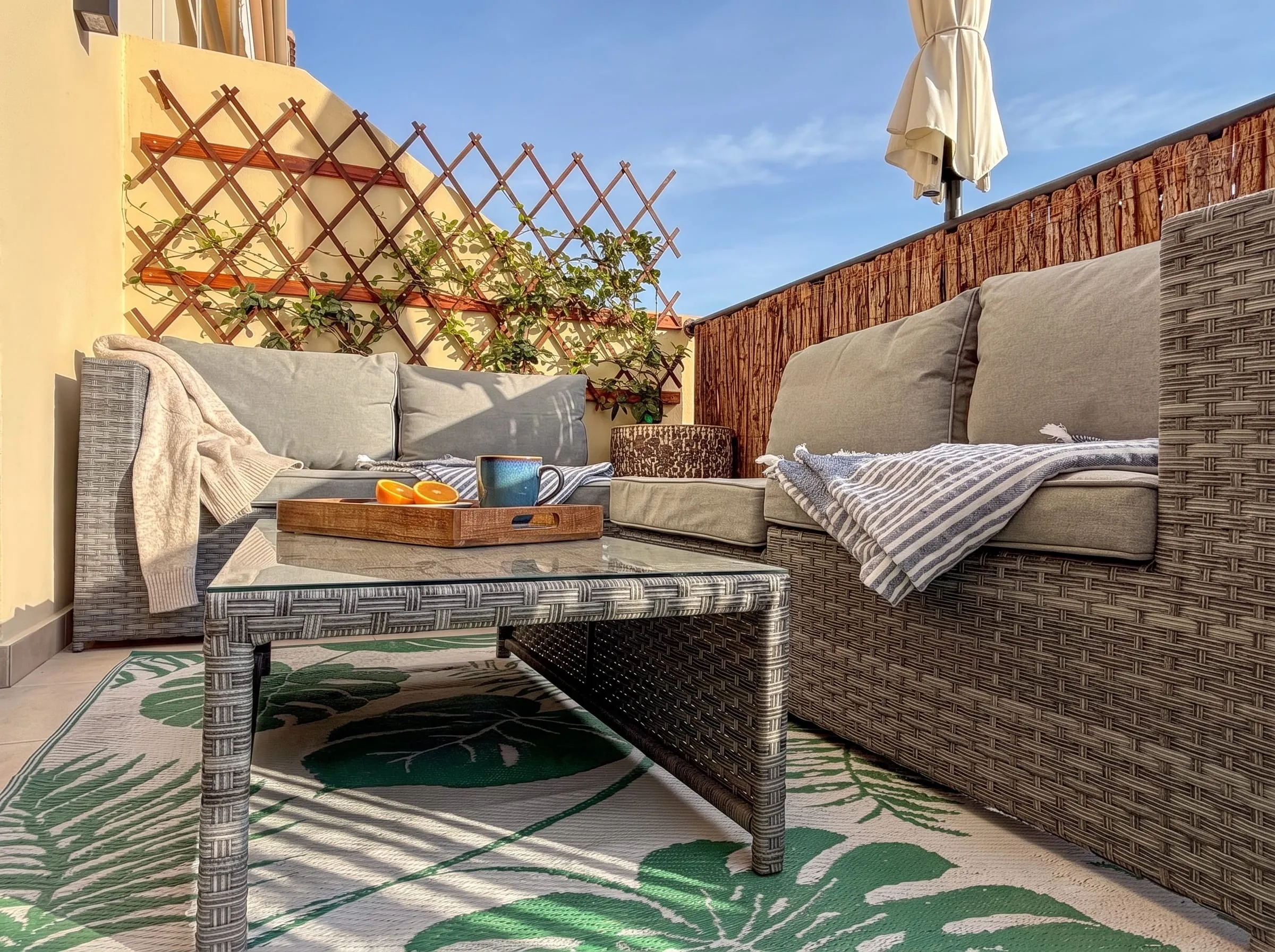
We are about five minutes on foot from the coastal path and about 20 minutes' walk from the lighthouse headland. Take binoculars down early, then come back for breakfast and coffee on the poolside terrace.
Inland, the Xeros Valley is about 30 minutes' drive and Evretou about 55; the Akamas and Pafos Forest make a full day. Free street parking is normally available beside the complex, and there is heating for the evenings and a washing machine for muddy trousers.
Migration rewards time. A week in spring gives you several mornings on the headland; a month lets you watch the season turn. November to March is our quiet season, and the best time for a longer stay: see our guide to winter in Pafos.
Styled image
Stay with us
The Pafos headland is a short walk away, and coffee on the terrace comes first.
One bedroom·sleeps up to 3·ground floor·two private terraces·fibre at around 200 Mbps·five minutes' walk to the coastal path
A month or more comes at a lower nightly rate, with a clean and a change of bed linen included. Flatio suits monthly stays; Airbnb, Booking.com and Vrbo suit nights and weeks. Final dates and prices are confirmed on the platform you book with.
November 2026
Availability here is displayed for general reference only and may not be up to date. Full availability and prices can be found on the booking platforms.
Checked on 23 September 2026. Times, prices, rules and event dates can change without notice, so please confirm with the official links below before you go. Our guides are friendly local knowledge, not professional advice: how we check them. Spotted something out of date? Tell us and we will put it right.
Nothing we would plan a trip around is confirmed just now. The full calendar shows what is expected later in the year.
Keep exploring
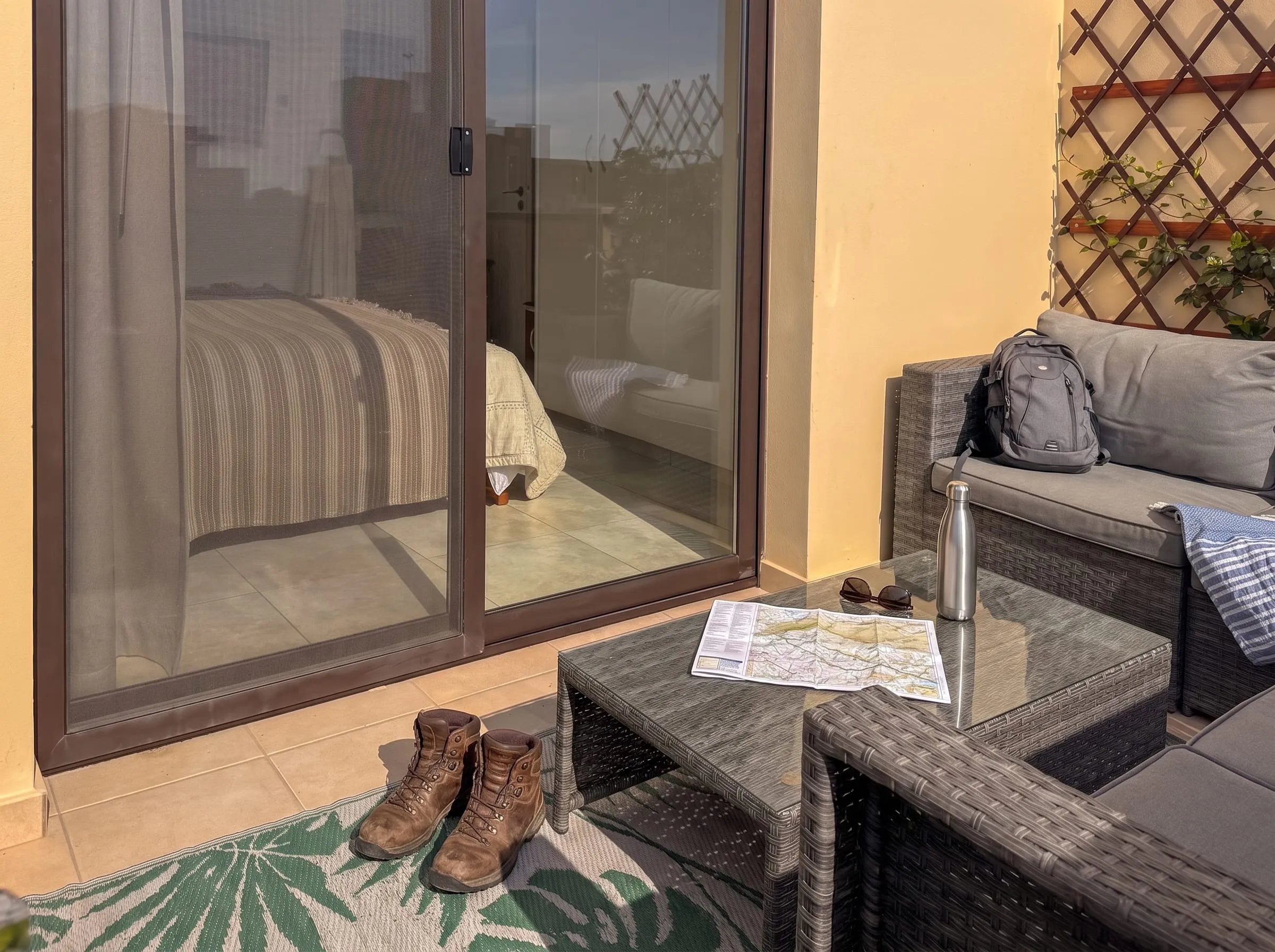
Winter walking
The coastal path, Akamas and Troodos trails, graded honestly.

Lighthouse Beach
The Blue Flag beach ten minutes from us: swimming, the lighthouse and the sunset.
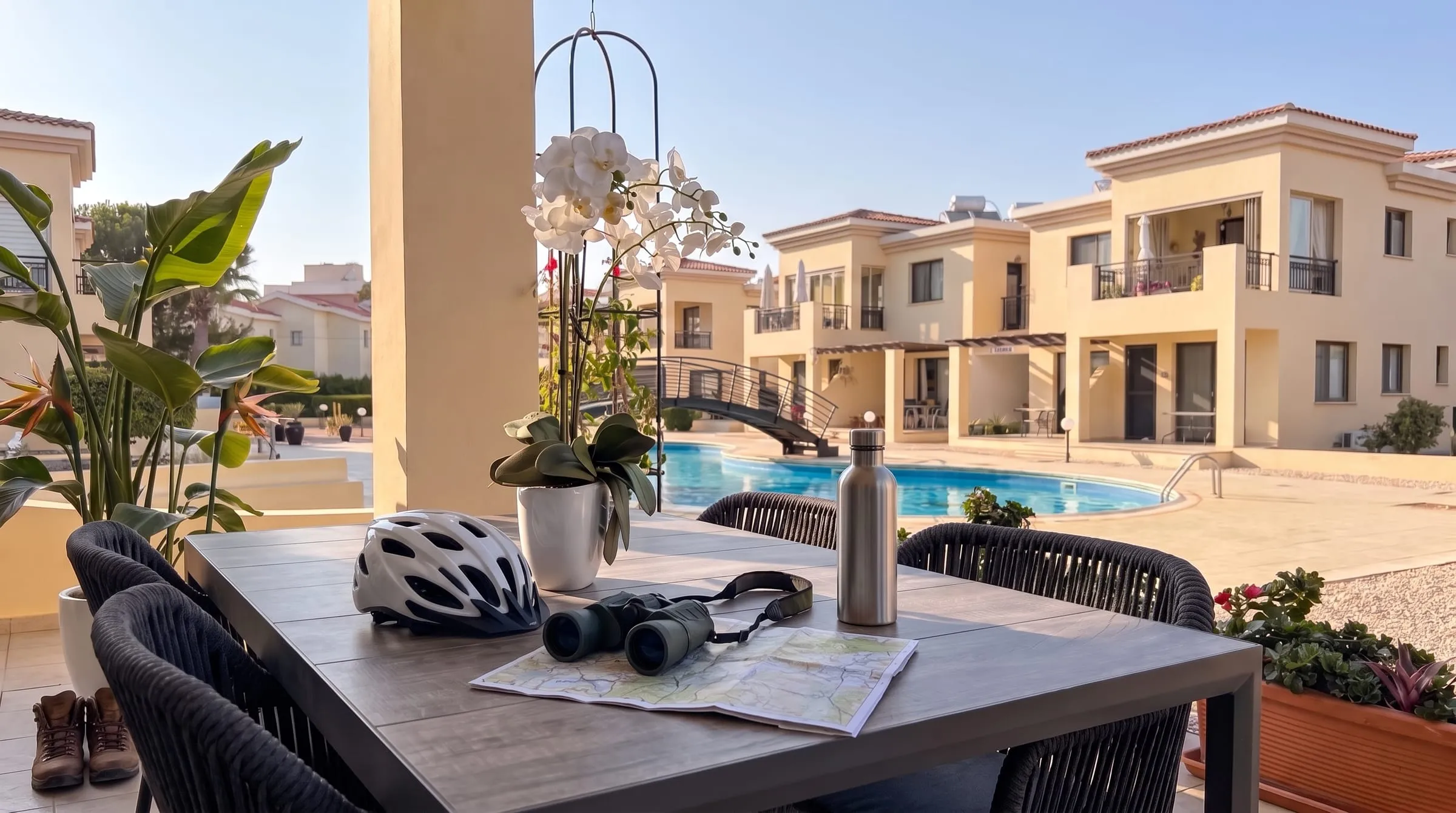
Active Pafos
Ride, walk, surf, ski or watch birds, and which weather suits which.
Winter in Pafos
The hub: what a Pafos winter holds, and where each day might take you.
What's on
The events worth planning a stay around, checked against official sources.
Winter sun
What the weather is really like, month by month, and what to pack.