Seasonal·Confirmed
Mountain Christmas village
21 November 2026 – 6 January 2027·Pafos district hills
(official site, opens in a new tab)
Winter · Surf
When winter weather comes in from the west, the Pafos coast can have surf. It is not the Atlantic and it is never guaranteed, but on the right day it is very real. The honest guide.
The short answer
Yes, sometimes. The Pafos coast has a few documented surf breaks, and they work mostly in winter, when weather from the west and south-west pushes wind-driven swell onto the shore.
It is not the Atlantic. The specialist forecast pages describe every break near Pafos as one that does not work very often. Come for the season, watch the forecast and go when it lines up. Nobody can promise you a wave, and we will not either.
In winter, mostly. Where the specialist surf database gives a season for the breaks near Pafos, it names winter every time, roughly November to March. That is when depressions come in from the west and south-west, and the west coast gets waves.
The waves here are mostly windswell rather than groundswell. In plain terms, they are made by the wind blowing at the time, not by a distant ocean storm sending swell from far away. So a surfable day depends on the weather on that day, which makes it hard to plan far ahead.
Wind is a regular part of winter here. In the 2025–26 winter, the Department of Meteorology's monthly reports recorded strong to gale-force winds in every month from November to March.
You will read elsewhere that the Cyprus surf season runs from March to November. That comes from travel and surf blogs writing about the island as a whole. The specialist pages for the Pafos breaks all say winter. For this stretch of coast, we go with the specialist data.
Surf-travel blogs are warmer. They describe winter on the west coast as uncrowded, with clear water and a welcoming local scene. That is how the blogs tell it; the forecasting pages are more sober, and we would plan by them.
Travel articles name plenty of spots. We list only the three that the specialist databases place near Pafos, with what those databases say about each. Other documented breaks cluster further along the south coast, around Limassol and Akrotiri.
A left-hand point break near Coral Bay, about 20 minutes' drive north of us. It works best with swell from the west-south-west and an offshore wind from the east-north-east. Surf-Forecast.com lists the hazards as rocks and sea urchins, calls it exposed, and says it does not work very often. It is surfable at all stages of the tide.
On the road from Pafos to Coral Bay, about 5 km north of Pafos town, below the Helios Beach Hotel. It is a breakwater and point break with mainly left-hand waves, best with west-south-west swell and an easterly offshore wind. The database notes there is no shelter from cross-shore breezes, calls it an exposed break that does not work very often, and says even good days bring relatively few surfers.
Travel writers often call Helios Bay the most popular surf spot in Cyprus. They also describe a cramped bay with rocks on either side, better left to experts. Read alongside the database, "most popular" probably means popular among the few people who surf here at all.
The closest of the three: the database places it near Pafos town, not far from us. It is an exposed beach break over a sandbar, best with swell from the south-south-west and an offshore wind from the north-east. The hazards it lists are rips, undertow and rocks. It works at all stages of the tide, is rarely crowded, and, like the others, does not work very often.
The break pages
The Surf-Forecast.com pages carry the database's full notes and a forecast for each break. Wannasurf and Stormrider cover Cyprus as a whole.
These are exposed breaks on a rocky coast. The hazards below come from the surf databases and from Cyprus sea-safety advice.
Honestly, it is not an easy place to learn. The database rates Potima Point and Helios Bay towards the easier end of its difficulty scale, but those ratings sit alongside rocks, urchins and exposed water, and travel guides call Helios Bay one for experts.
We could not confirm a surf school operating in Pafos itself. The schools we found are elsewhere on the island, and we would rather not point you to one we have not been able to verify.
If you are new to surfing, learn where a school runs lessons, and come to Pafos once you can read the sea and handle yourself in it.
You do not need to be a meteorologist. Three things matter most here.
Surf-Forecast.com forecasts each break. Windguru, Windy and Windfinder show which way the wind will blow over Pafos, and when it will change. Check the official warnings too: a promising surf forecast and a storm warning can arrive together.
Surf and wind forecasts
Forecasting sites tell you about waves. Official sources tell you whether it is wise to be near the sea at all.
The Department of Meteorology treats the west coast, from Cape Gata to Cape Arnaoutis, as its own warning zone, and Pafos sits inside it. Check its forecast and the live warnings on Meteoalarm before you set out. CY-Alert, run by Cyprus Civil Defence, sends emergency alerts to phones, with no app or registration needed.
On the beach, follow lifeguard flags and instructions where there is a lifeguard, and do not assume there will be one.
Official warnings and advice
If you surf and are bringing your own boards, we make a practical base for the west coast. Potima is about 20 minutes' drive, Coral Bay about 25, and the coastal path about five minutes on foot. Free street parking is normally available beside the complex, though there is no dedicated guest space.
The store room
Your boards stay dry, secure and out of the apartment.
A secure underground store room, separate from the apartment, for the kit that does not belong in a bedroom: bikes, boards, skis and the bags that go with them. About 3 × 2.5 m, with a tall ceiling.
We are fitting it out with fixed bicycle wall mounts, surfboard racks, ski and snowboard storage, shelving, hooks for wetsuits, helmets and bags, good lighting. Ask us what is in place for your dates.
It is storage, not a workshop. Bring the tools and spares you rely on; we keep the room simple, dry and secure.
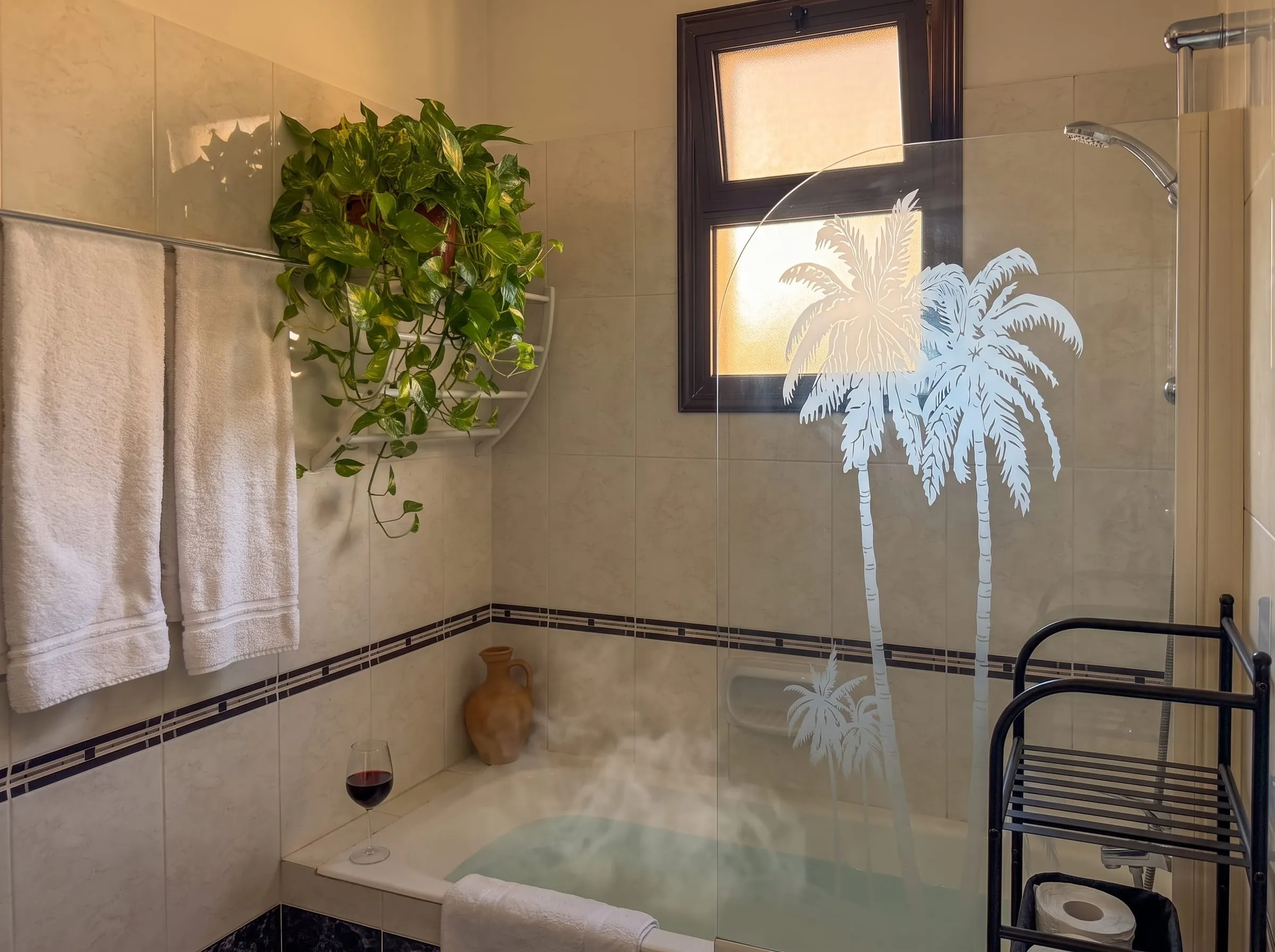
Back in the apartment, there is heating and a hot bath for when you come in cold.
Styled image
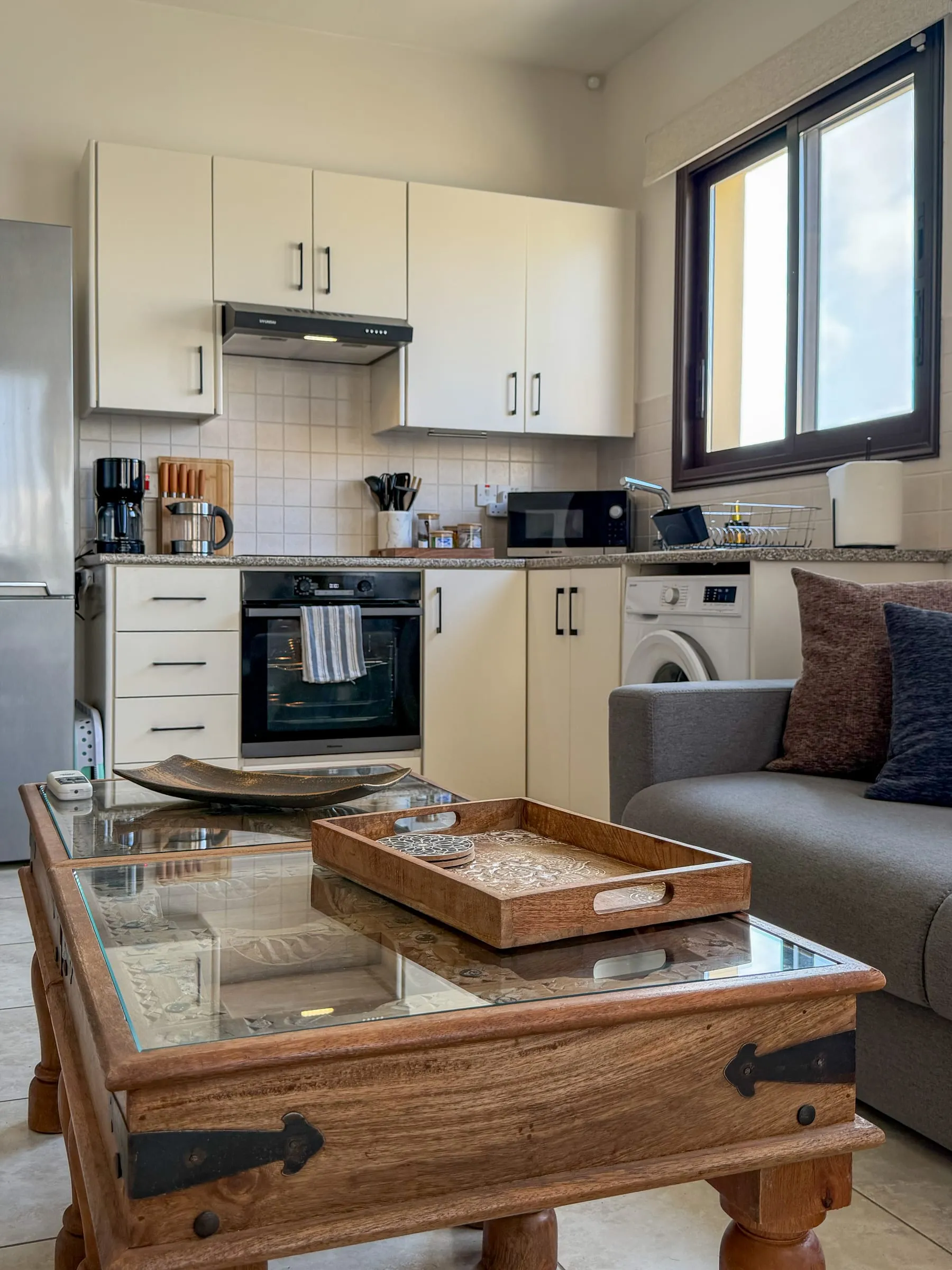
There is a washing machine for rash vests and towels, and the kitchen is properly equipped for an early breakfast before the drive.
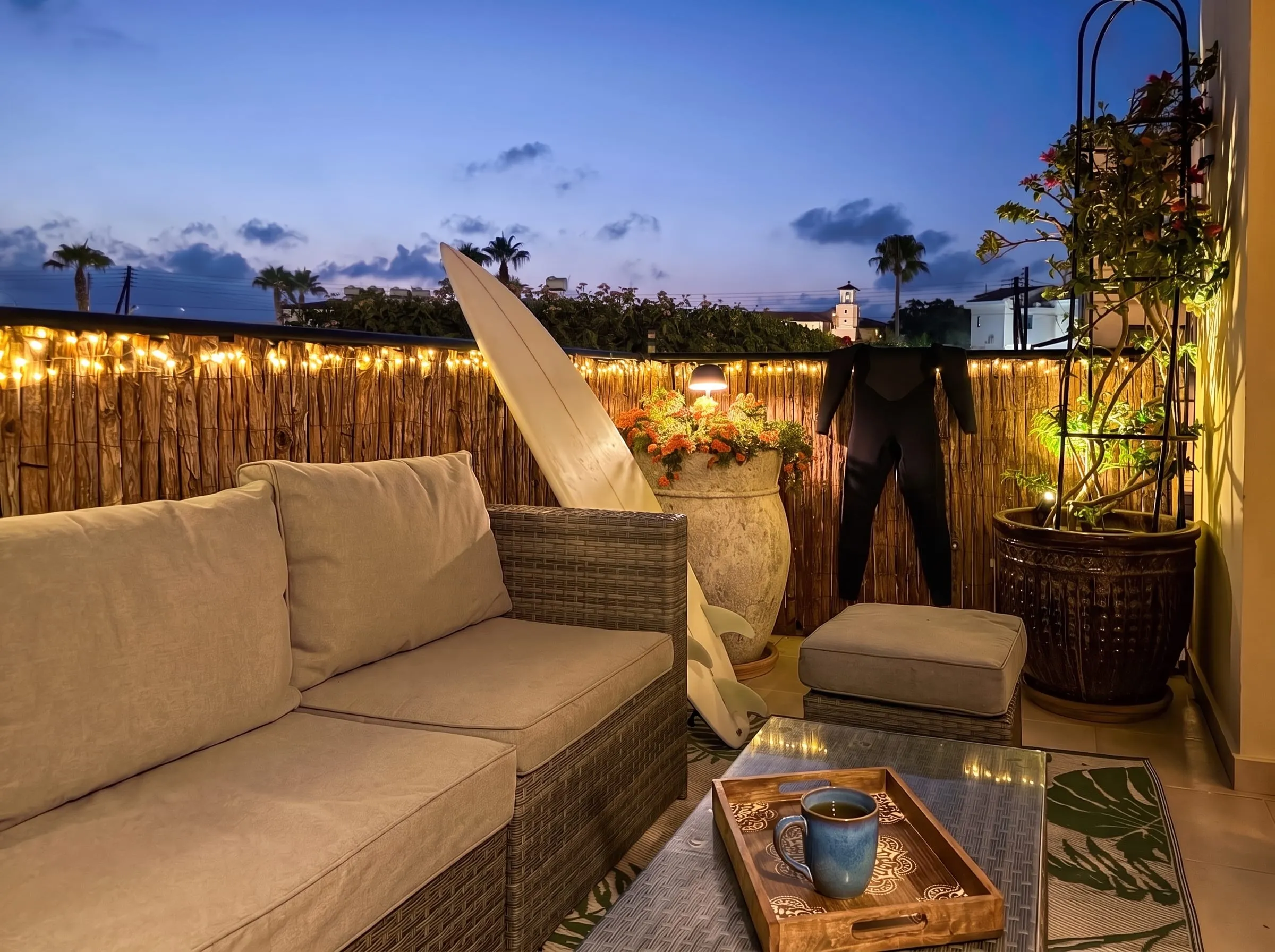
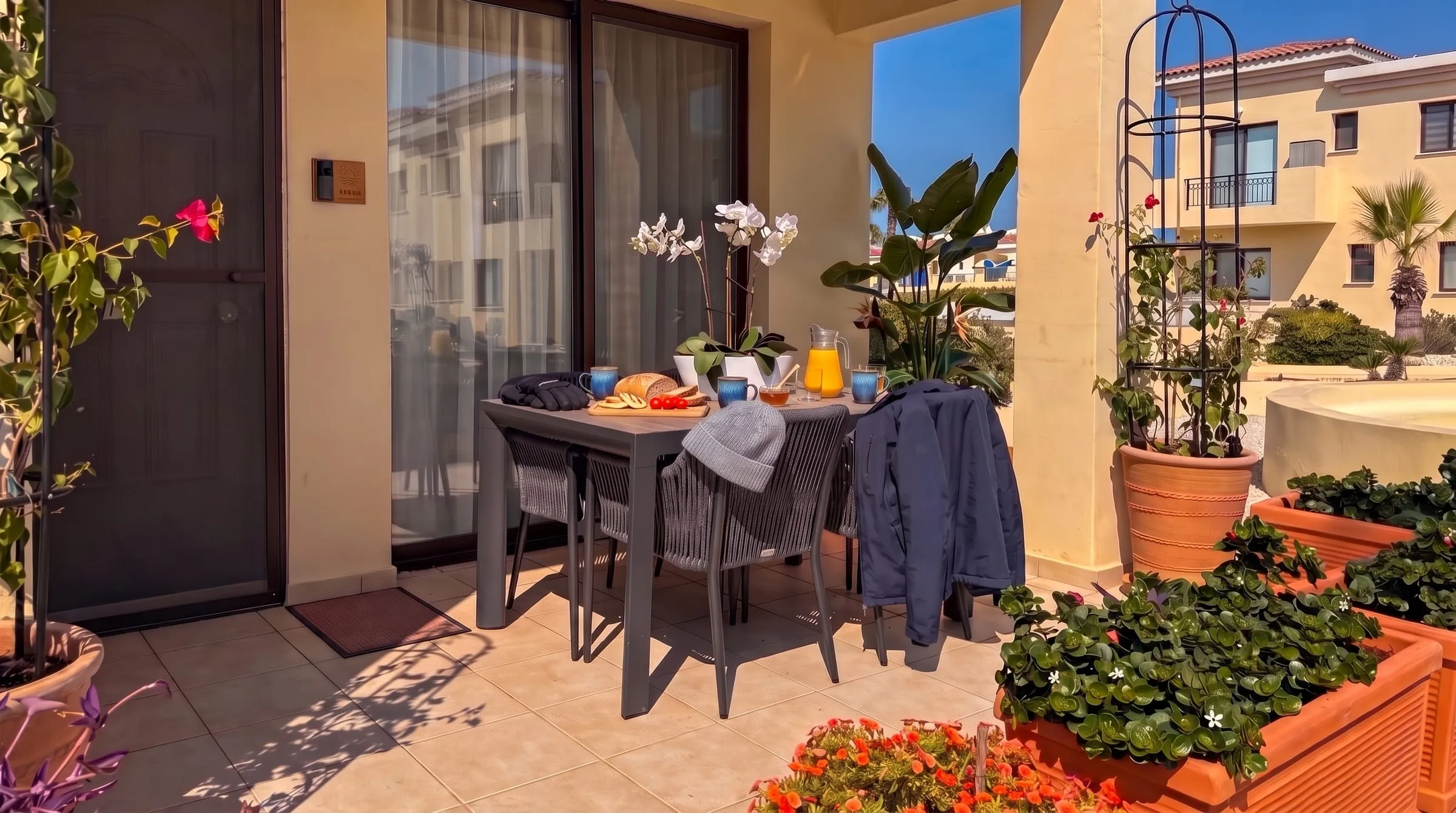
In the evening, the south-facing terrace holds the afternoon sun and looks towards the sea, and the Wi-Fi reaches it. It is a good place to open tomorrow's forecast as the light goes, and decide whether the alarm is worth setting.
On the days the sea stays flat, and there may be many, there is plenty else. Walk the coast with our winter walking guide, head up to Troodos when there is snow and the mountain roads are open with ski and sea, or start with winter in Pafos for everything else the quiet season holds.
Stay with us
Watch the forecast from the terrace and go when it works.
One bedroom·sleeps up to 3·ground floor·two private terraces·fibre at around 200 Mbps·five minutes' walk to the coastal path
A month or more comes at a lower nightly rate, with a clean and a change of bed linen included. Final dates and prices are confirmed on the platform you book with.
November 2026
Availability here is displayed for general reference only and may not be up to date. Full availability and prices can be found on the booking platforms.
Checked on 23 September 2026. Times, prices, rules and event dates can change without notice, so please confirm with the official links below before you go. Our guides are friendly local knowledge, not professional advice: how we check them. Spotted something out of date? Tell us and we will put it right.
Seasonal·Confirmed
21 November 2026 – 6 January 2027·Pafos district hills
(official site, opens in a new tab)Sport·Confirmed
26–29 November 2026·Pafos district
Seasonal·Fixed date
6 January 2027·Kato Pafos
Sport·Confirmed
27–28 February 2027·Pafos
Sport·Confirmed
26–28 March 2027·Pafos
Nothing we would plan a trip around is confirmed just now. The full calendar shows what is expected later in the year.
Keep exploring
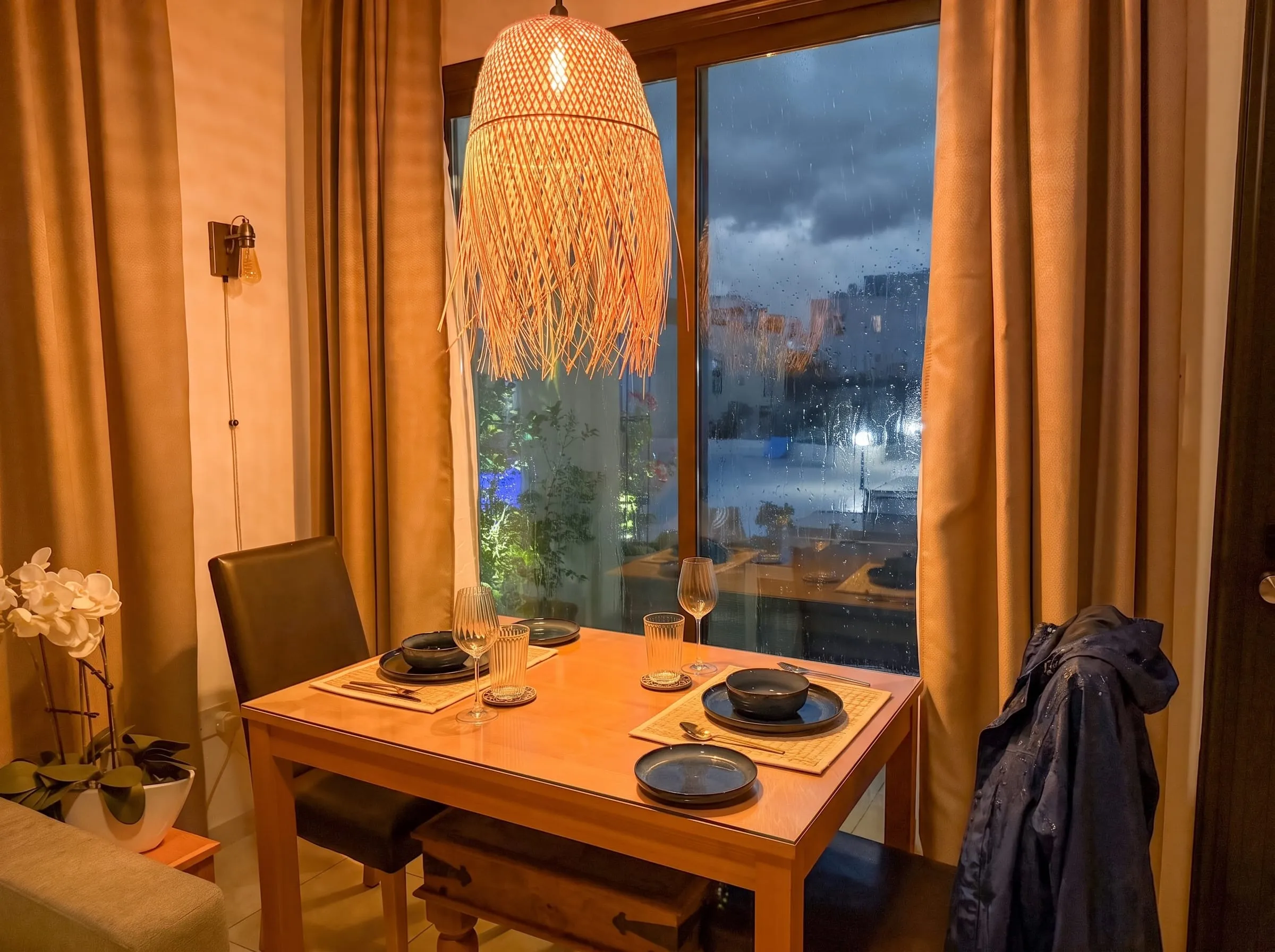
Winter storms
Wave watching and dramatic weather, and how to enjoy it safely.
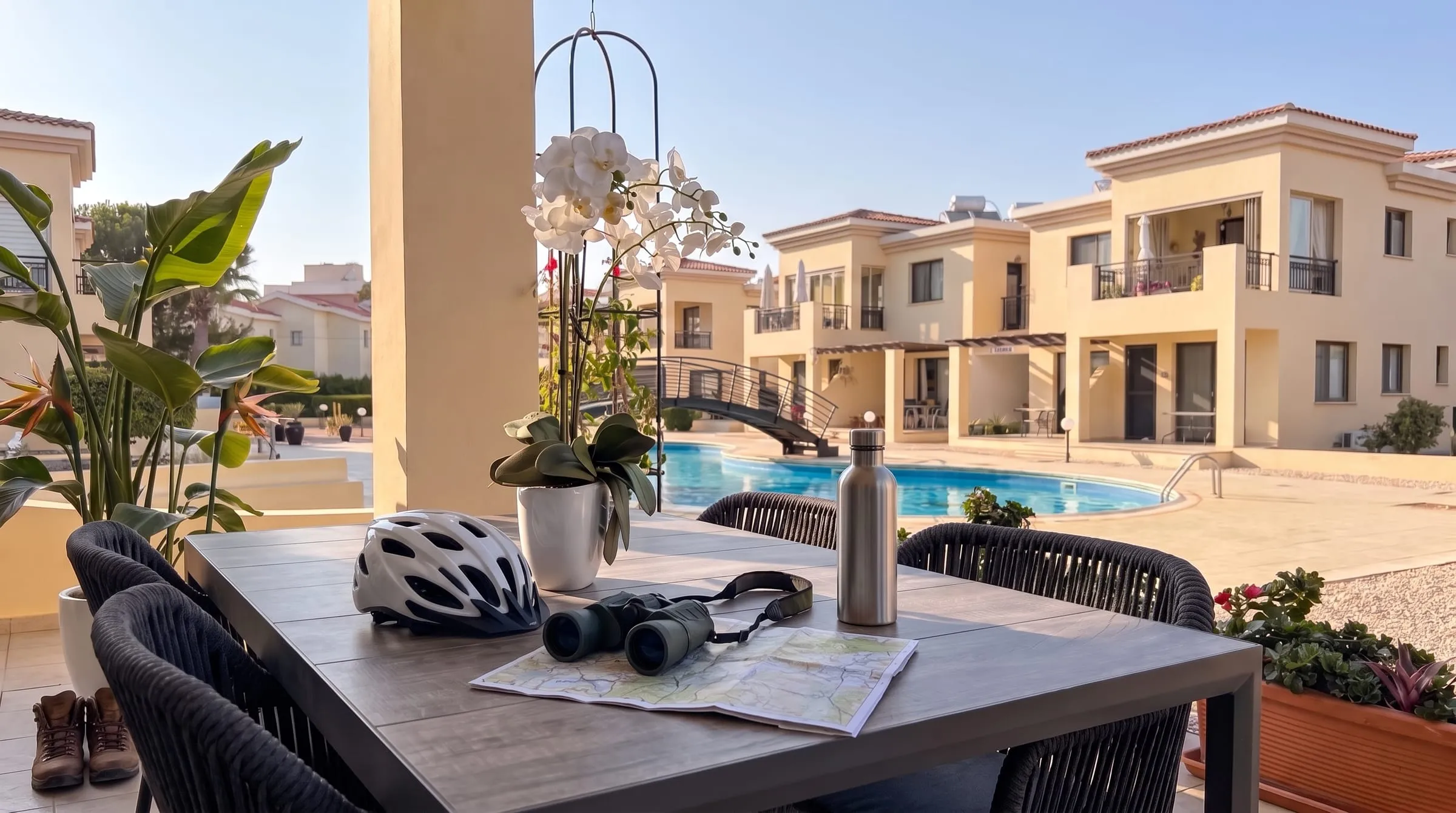
Active Pafos
Ride, walk, surf, ski or watch birds, and which weather suits which.
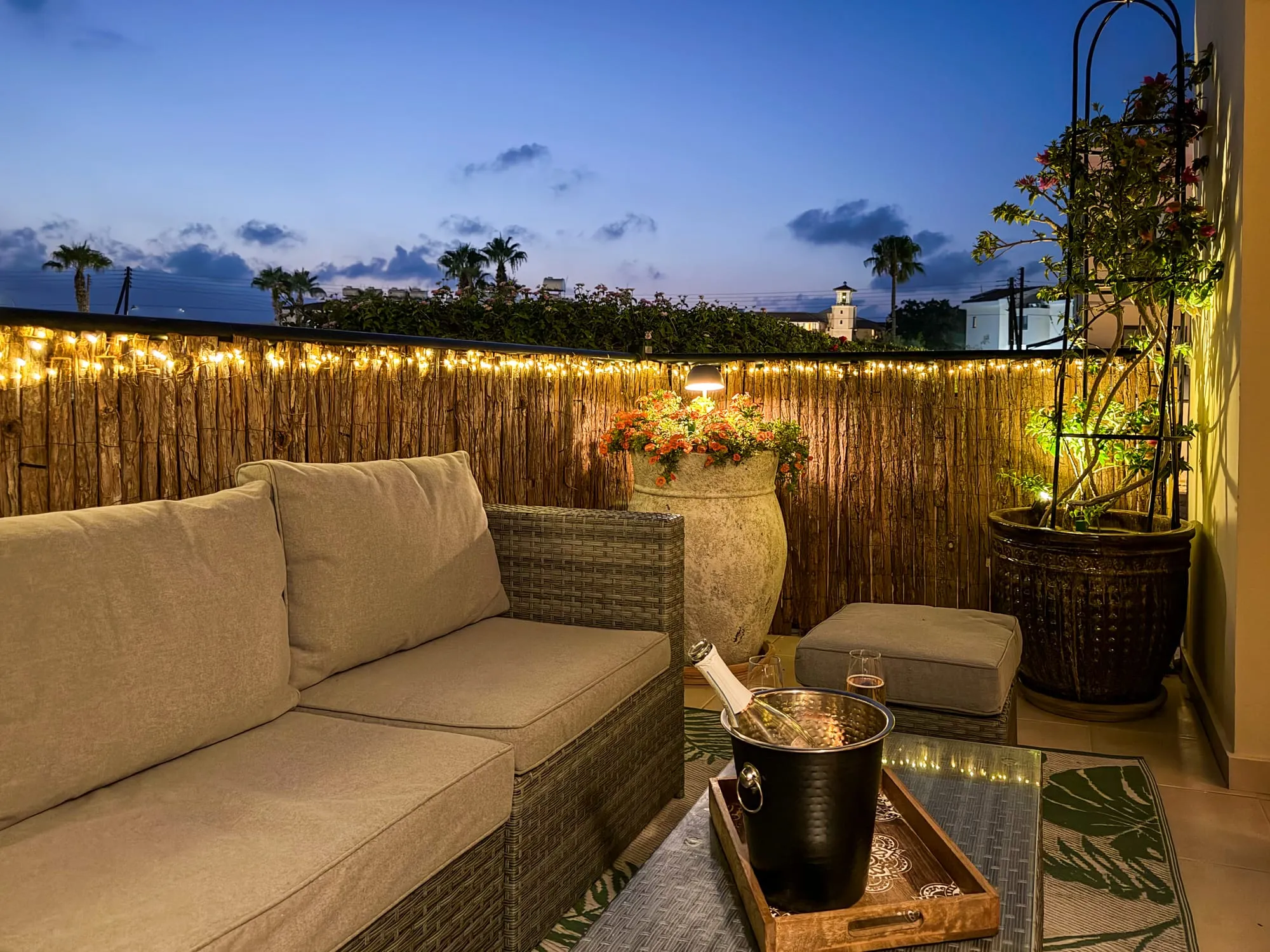
Winter in Pafos
The hub: what a Pafos winter holds, and where each day might take you.
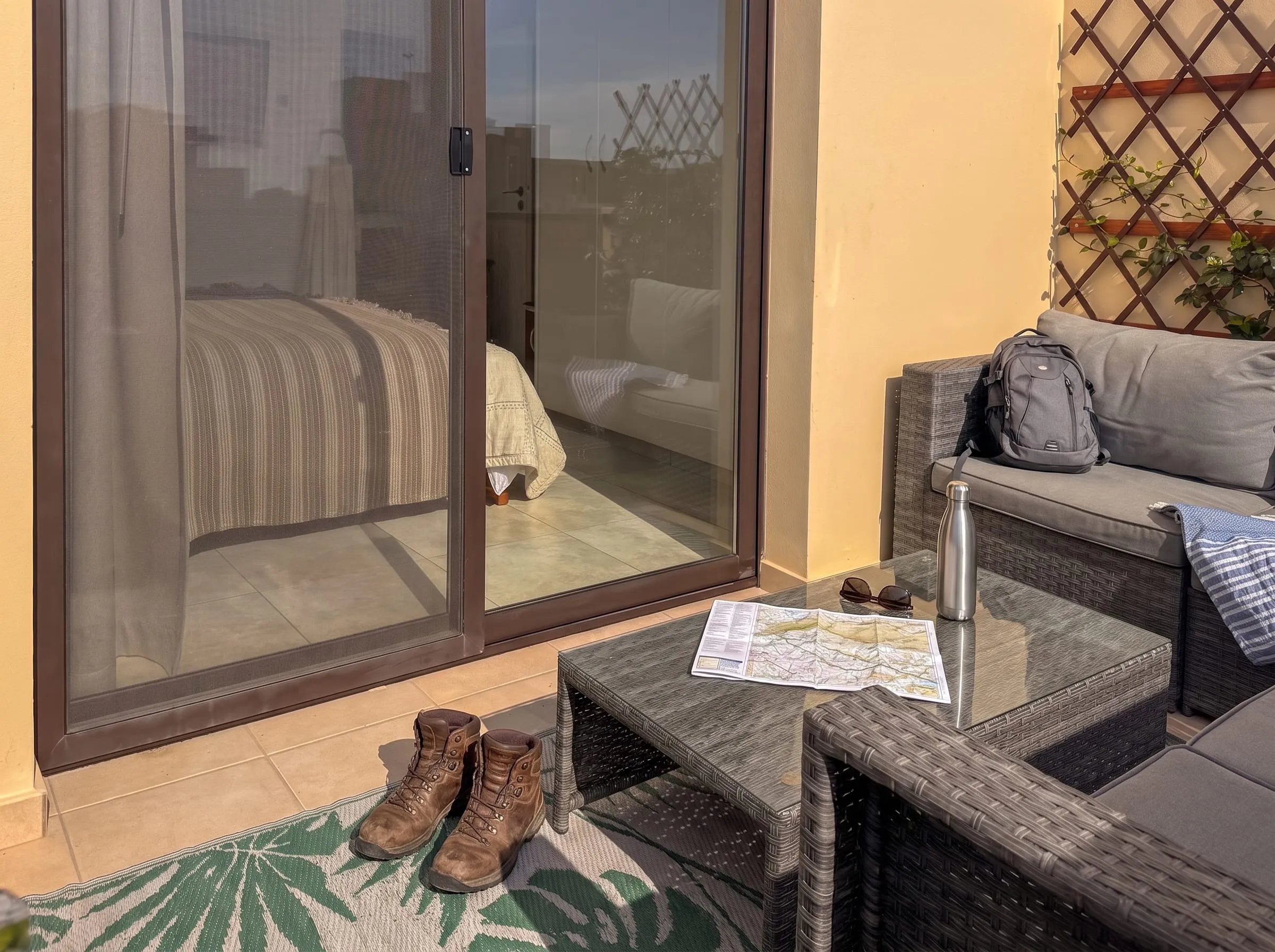
Winter walking
The coastal path, Akamas and Troodos trails, graded honestly.
Ski and sea
Troodos snow and the Pafos coast in one trip, when the snow allows.