Seasonal·Confirmed
Mountain Christmas village
21 November 2026 – 6 January 2027·Pafos district hills
(official site, opens in a new tab)
Winter · Weather
In spells through the winter the wind picks up, the sea stands up and the coast puts on a show. How to watch it well, where to check the warnings, and how to stay on the right side of it.
The short answer
Yes. Winter in Pafos is mostly mild, but it comes in spells, and some of those spells bring gale-force wind, heavy rain and rough seas. The Department of Meteorology gives the west coast its own warning zone. Its reports for the 2025–26 winter record strong to gale-force winds in every month from November to March, and a named storm, Byron, that flooded parts of the Pafos district in December.
From a safe distance, a rough day on this coast is something to see. Check the official warnings, watch from well back, and come home warm.
Wind is the constant. The Department of Meteorology's monthly reports for the 2025–26 winter mention strong to gale-force winds in every month from November to March, at times reaching force 9 or 10 in February and March. On those days the sea stands up, the spray carries, and the coast feels nothing like the still blue of a calm morning.
Rain tends to come in spells rather than for weeks on end. The reports list unsettled periods with calmer weather between them, which is the usual winter rhythm here: a front comes through, then the sun comes back.
The days the Department of Meteorology's monthly reports picked out, for the Pafos area and the island, from November 2025 to March 2026.
That February damage is worth remembering. When the sea is up, it reaches the seafront itself.
Honestly, we cannot give you a number. We have not found an official count of storms per winter for Pafos, and one winter is not a pattern. In 2025–26, rough weather hit the Pafos district in November, December and February. March brought gales across the island, and strong winds featured in every month of the season.
Most of those episodes lasted one to three days. Byron was the long one, at about a week. Between the spells, the weather settled.
So allow for a rough day or two, without counting on one. For what the rest of the season is like, month by month, see winter sun in Pafos.
Some do. The Department of Meteorology's own December 2025 report calls that month's storm by its name, Byron, or Vyronas.
A name is a useful signal. If you hear one on the news during your stay, check the warnings before you plan the day.
The Cyprus Department of Meteorology issues weather warnings by zone, and its warnings guide divides the coast into four. Pafos sits in the West coast zone, which the Department defines as "the area from cape Gata to cape Arnaoutis, extending 10 kilometres inland from the coastline". The zone has its own thresholds for wind, rain and temperature, separate from inland areas and the mountains, so a warning for the West coast is a warning for us.
Warnings are colour-coded by level, and the Department's Weather Warnings Guide explains what each level means. The simplest place to see what is in force today is Meteoalarm, which gathers the official Cyprus warnings in one place.
Since 2026, Cyprus also has CY-Alert, a national emergency alert system run by Cyprus Civil Defence. It sends messages to phones by cell broadcast, with no app and no registration. If one arrives, read it and follow it.
Where to check
Official sources first. Check on the day, and again before you head out.
Wave watching is one of the quiet pleasures of a Pafos winter, and it asks very little of you: a warm layer, a flask and distance. Our rule is simple. You should be able to see the sea without the sea being able to reach you.
Stay on high, solid ground well back from the water, with a clear way out behind you. If spray or water is reaching where you stand, you are too close: move back, and keep moving back until it is not. Waves do not keep a steady rhythm, and a bigger one can follow a run of small ones. Keep children and dogs close, and never turn your back on the sea.
We would never suggest going out to chase a storm. The best of it can be seen from well back, and often after it has passed.
Gently, and from where you already stand. A zoom lens, or the zoom on your phone, does the work that stepping closer would, and keeps you out of the spray. A cloth in your pocket for the lens is worth more than any filter.
Some of the best pictures come at the edges of the weather: a dark front out over the sea, the first break in the cloud, the light on wet stone after the rain. Winter days are short, so give yourself time to be home before dark.
Stay on paths, never climb onto rocks or walls for a better angle, and never step past a barrier for a shot. No photograph is worth it.
This is our favourite part. When a front clears, the coast can feel rinsed and bright, and the sea takes its time to settle. It is a good moment to walk. The coastal path is about five minutes on foot from our door, and our winter walking guide has longer routes and where to check that a trail is open. If a stretch of path is closed or damaged after a storm, respect the closure.
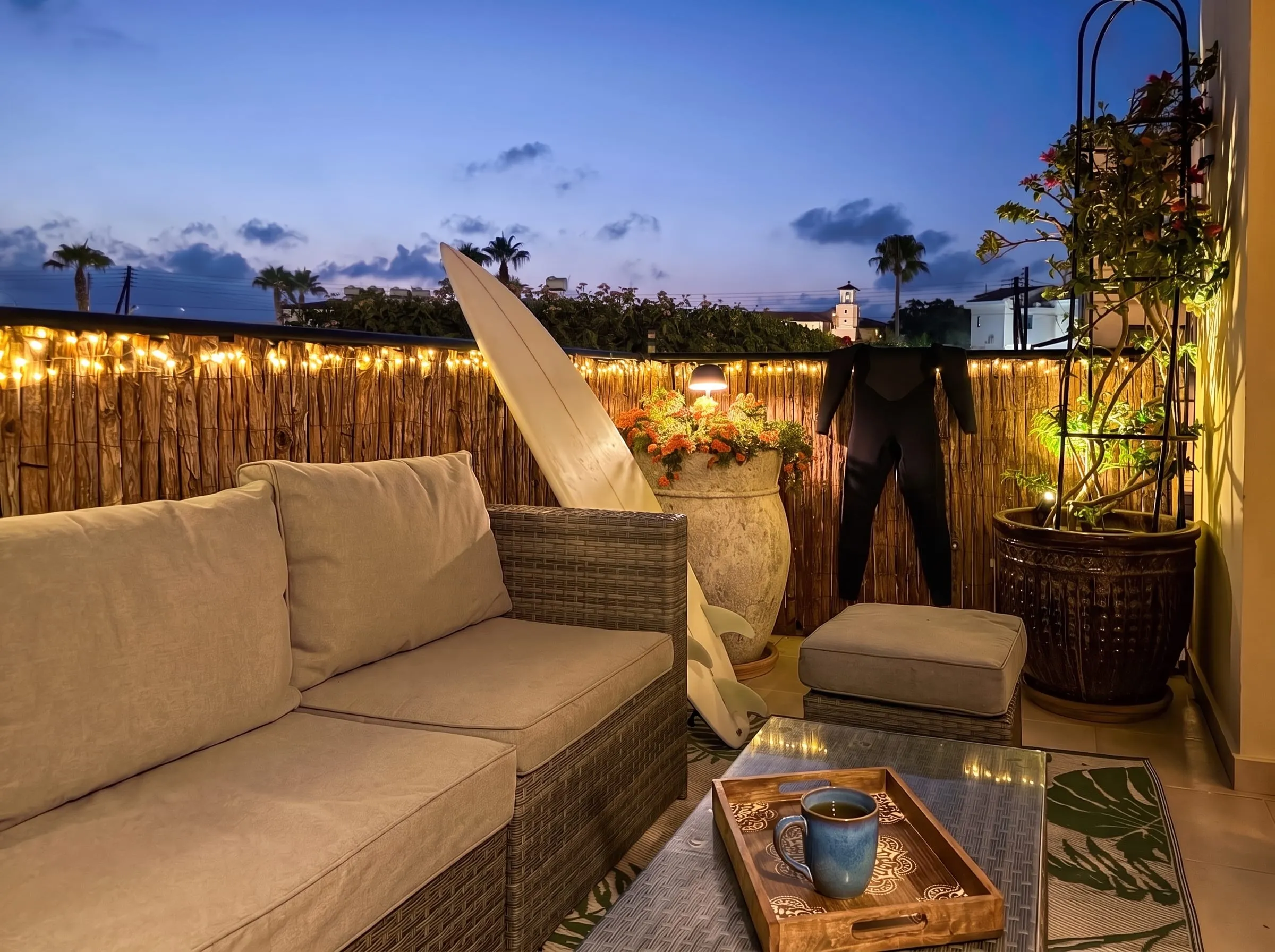
The same west and south-westerly winter systems can bring surf. On this coast it is wind-driven and far from reliable, and the specialist forecasters rate the local breaks as inconsistent, but on the right day it is real. Our surfing guide covers when the Pafos breaks work, the hazards, and how to read the forecast.
For everything else the season holds, from Troodos snow to birdwatching, start at winter in Pafos.
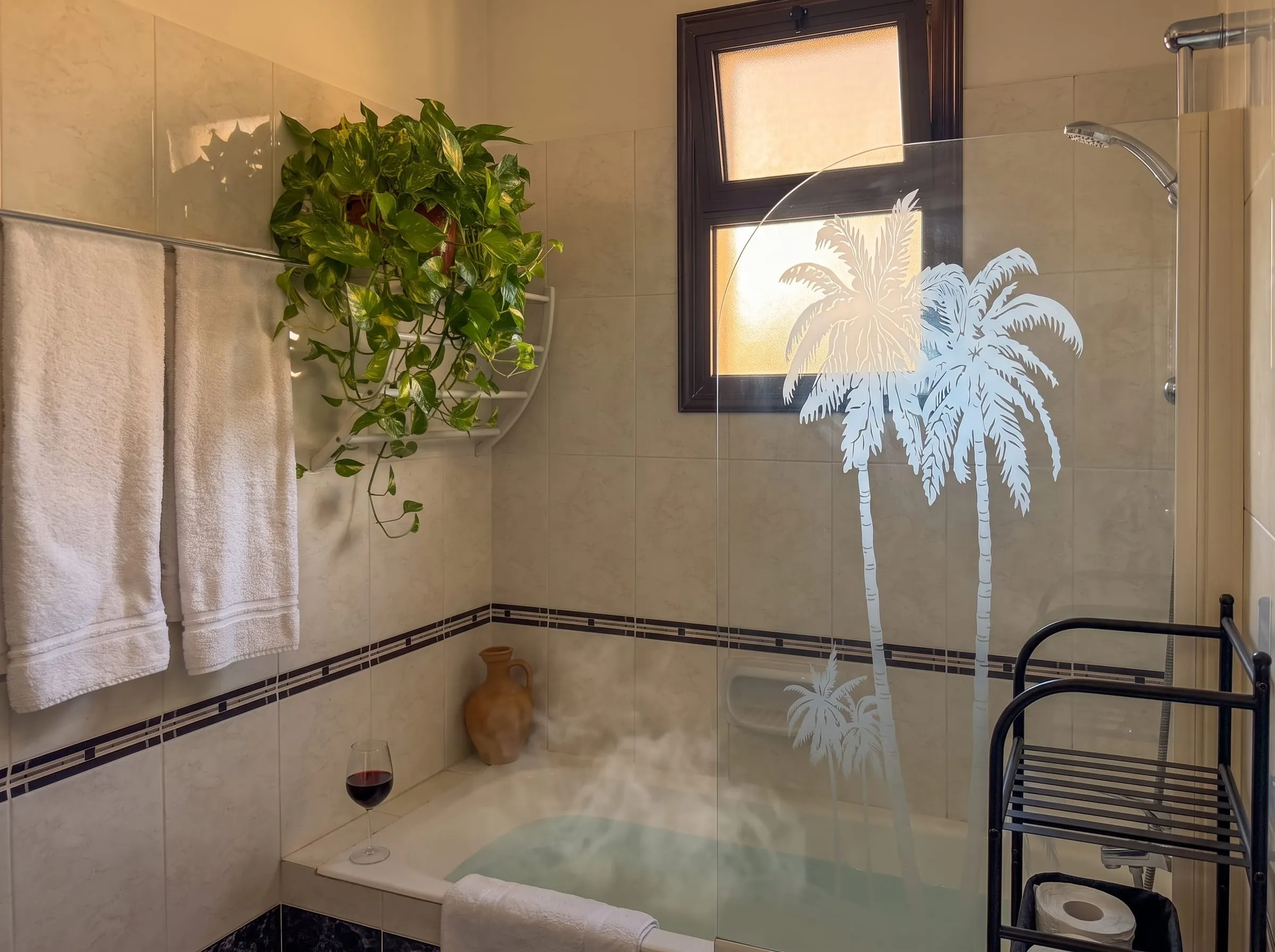
With us, it is a short walk home. Air conditioning and heating throughout. Turn the heating on as you come in, run a hot bath, and let the wind do what it likes outside.
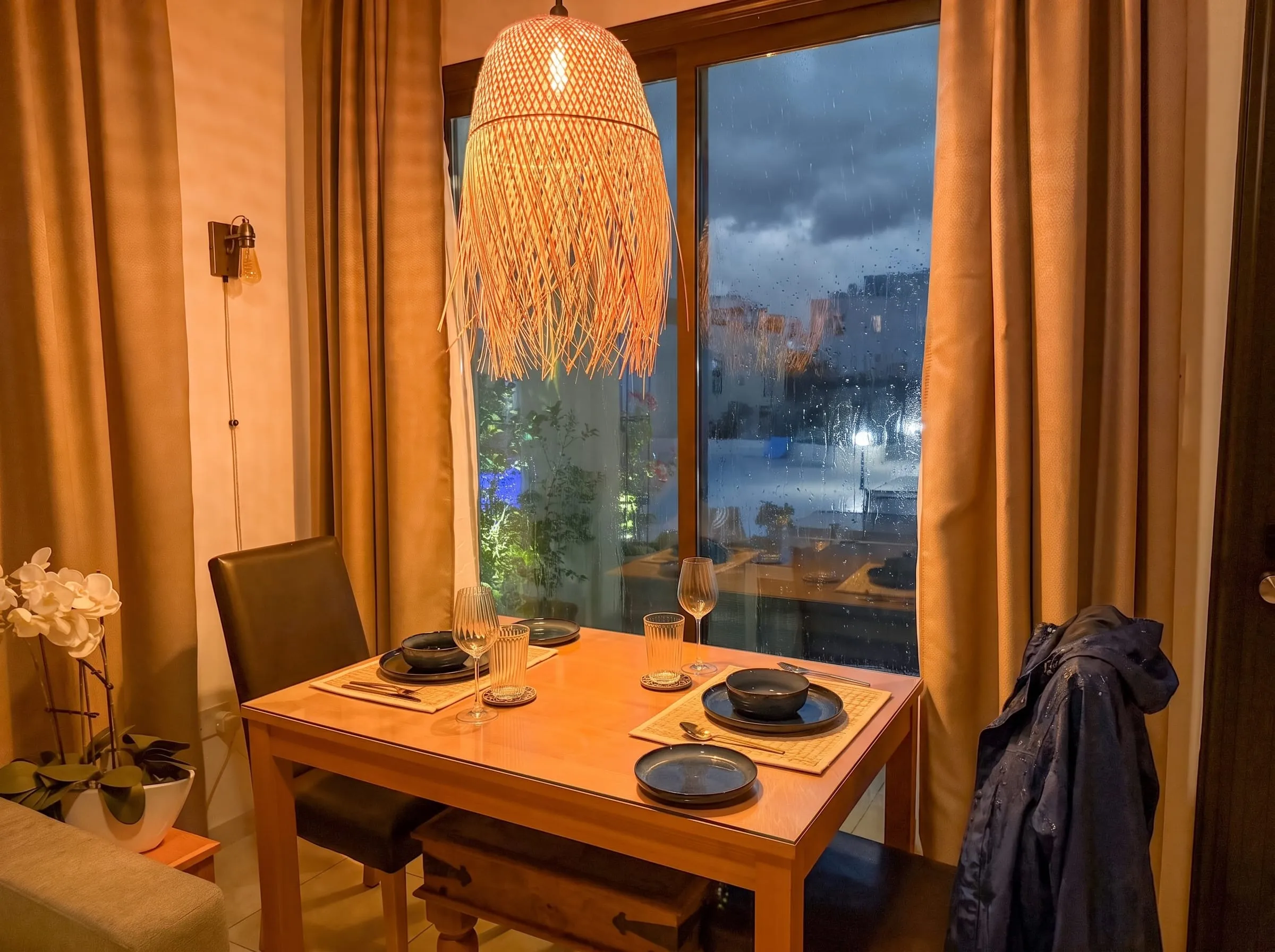
There is a washing machine for wet, salty clothes, a properly equipped kitchen for something warm, and a living room made for the evening: lamps lit, the sofa, and a film on the 55-inch TV if the rain settles in.
Nights on the coast are cool rather than cold. The Department of Meteorology's reports show Pafos minimums often between 6 and 10°C from December to February, occasionally lower. In the 2025–26 winter they recorded no frost on the coast in any of those three months. When the sky clears, the south-facing terrace holds the afternoon sun again.
Styled image
Stay with us
About five minutes on foot from the coastal path, with heating and a hot bath waiting.
One bedroom·sleeps up to 3·ground floor·two private terraces·fibre at around 200 Mbps·five minutes' walk to the coastal path
A month or more comes at a lower nightly rate, with a clean and a change of bed linen included. Final dates and prices are confirmed on the platform you book with.
November 2026
Availability here is displayed for general reference only and may not be up to date. Full availability and prices can be found on the booking platforms.
Checked on 23 September 2026. Times, prices, rules and event dates can change without notice, so please confirm with the official links below before you go. Our guides are friendly local knowledge, not professional advice: how we check them. Spotted something out of date? Tell us and we will put it right.
Seasonal·Confirmed
21 November 2026 – 6 January 2027·Pafos district hills
(official site, opens in a new tab)Sport·Confirmed
26–29 November 2026·Pafos district
Seasonal·Fixed date
6 January 2027·Kato Pafos
Sport·Confirmed
27–28 February 2027·Pafos
Sport·Confirmed
26–28 March 2027·Pafos
Nothing we would plan a trip around is confirmed just now. The full calendar shows what is expected later in the year.
Keep exploring
Surfing
When the west coast works, where to look, and how to read the forecast.

Winter in Pafos
The hub: what a Pafos winter holds, and where each day might take you.
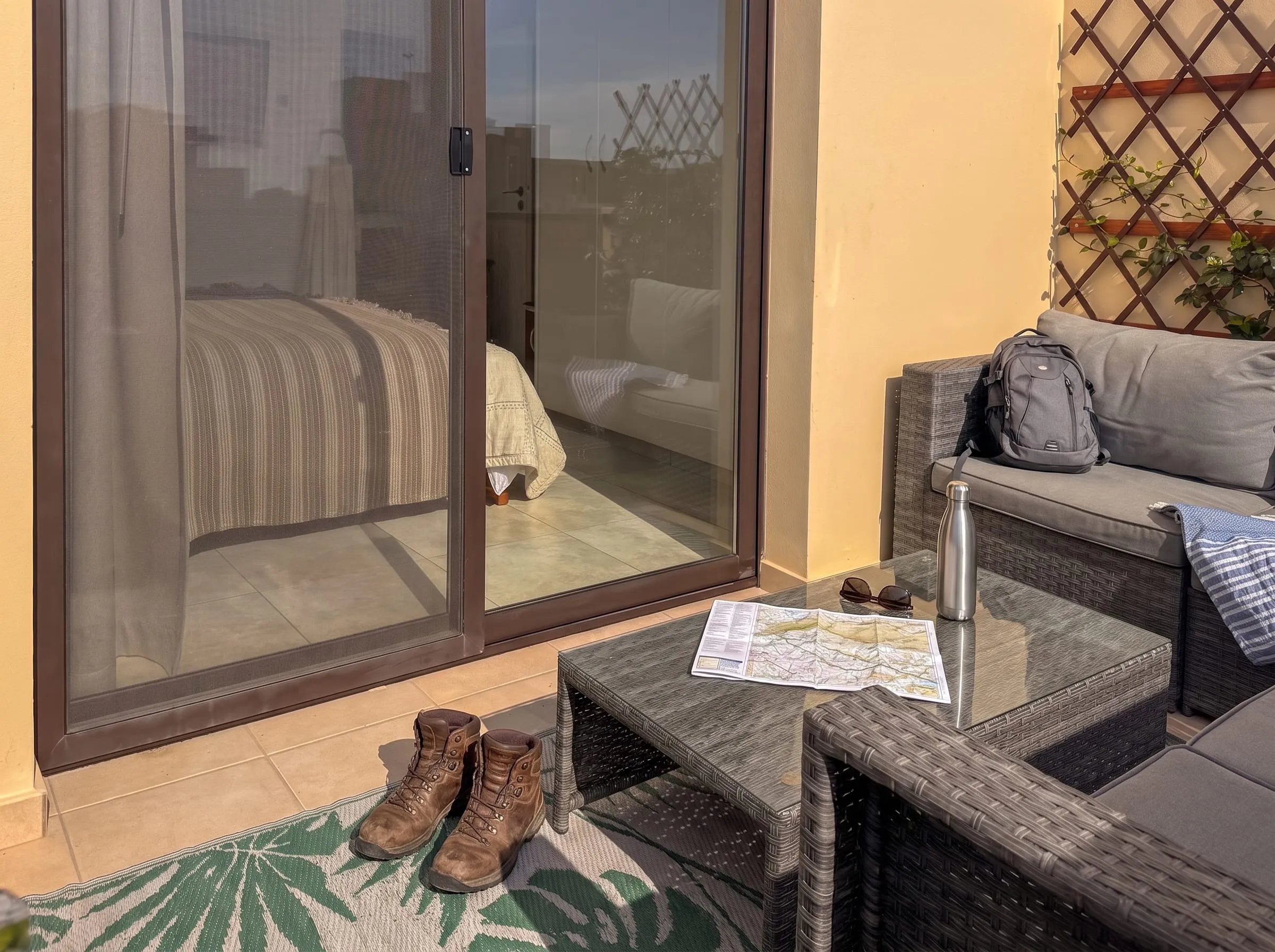
Winter walking
The coastal path, Akamas and Troodos trails, graded honestly.

Winter sun
What the weather is really like, month by month, and what to pack.